

Best Ways to Brew Loose Tea: A Step-by-Step Guide
Table of Contents
- What You'll Need to Brew Loose Tea
- Best Water Temperature for Tea by Type
- How Much Loose Leaf Tea Per Cup
- Loose Leaf Tea Steeping Time Guidelines
- Step-by-Step Process to Brew Loose Tea
- How to Brew Loose Tea Without an Infuser
- Common Brewing Mistakes to Avoid
- Frequently Asked Questions
Last Updated: October 8, 2026
What You'll Need to Brew Loose Tea
Brewing loose tea at home requires just a few essential items. The good news: you probably have most of them already.
Start with a tea infuser or strainer. A basket infuser, ball infuser, or mesh strainer all work well. These let tea leaves expand fully while keeping them out of your cup. A simple mesh strainer costs just a few dollars and lasts for years.
You'll also need a brewing vessel. A teapot, mug, or glass cup works fine. Glass is great because you can watch the leaves unfurl and see the color develop.
A tea kettle matters more than you'd think. You need to heat water to specific temperatures depending on your tea type. An electric kettle with temperature control is ideal. A stovetop kettle works too, you just need to monitor the heat more carefully.
Finally, get a timer or clock. Steeping time is critical. Too short and your tea tastes weak. Too long and it becomes bitter. A phone timer works perfectly.
That's truly all you need to start. Once you get comfortable, you might add tools like a gooseneck kettle for better pouring control or a tea scoop for measuring, but these are optional upgrades.
Best Water Temperature for Tea by Type
Water temperature directly affects how tea tastes. Different tea types need different heat levels because of how their compounds extract.
Black tea (like English Breakfast from Pups Brew) needs the hottest water: 195-212°F. This higher heat pulls out the bold, full-bodied flavors these leaves need. Steep for 4-5 minutes.
Green tea requires cooler water: 160-180°F. Hot water over-extracts green tea and brings out harsh, grassy bitterness. Steep for 2-3 minutes instead.
Oolong tea falls in the middle: 195-205°F. Steep for 3-5 minutes depending on the specific blend.
Herbal infusions like our Peach Paradise and Hibiscus Berry Tea handle boiling water well: 200-212°F. These aren't true "teas" in the botanical sense, so extraction rules are more forgiving. Steep for 5-10 minutes.
Matcha is special. Don't pour boiling water directly onto matcha powder. Heat water to 160-180°F, whisk the powder into a small amount of warm water first, then add the rest. This prevents clumping and bitter flavor.

| Tea Type | Water Temperature | Steeping Time |
|---|---|---|
| Black tea | 195-212°F | 4-5 minutes |
| Green tea | 160-180°F | 2-3 minutes |
| Oolong | 195-205°F | 3-5 minutes |
| Herbal infusions | 200-212°F | 5-10 minutes |
| Matcha | 160-180°F | N/A (whisked) |
The reason this matters: water temperature controls extraction speed. Hot water pulls compounds out fast. Cool water extracts slowly. Push the temperature too high on delicate leaves and you extract tannins, the compounds that create astringency and bitterness.
How Much Loose Leaf Tea Per Cup
The standard ratio is simple: one teaspoon of loose leaf tea per 8-ounce cup of water. This works for most teas.
But the actual amount varies slightly by tea type and personal preference. Some people like stronger tea. Others prefer it lighter.
For black teas like our Earl Grey, use the stronger end of the range. Black tea leaves are denser and need more leaf material to develop full flavor.
For green teas and delicate blends, use slightly less, about three-quarters of a teaspoon per cup. These leaves are lighter and more tightly rolled. A little goes further.
For herbal infusions like our Masala Chai, use a full teaspoon or even slightly more.
A few practical tips:
- Loose leaf tea expands significantly when it steeps. What looks like a lot in your infuser will actually be the right amount once it unfurls.
- If you're unsure, start with slightly less. You can always brew a second steep with the same leaves, most quality loose leaf tea can be steeped multiple times.
- Invest in a small kitchen scale if you brew frequently. Measuring by weight (grams) is more accurate than by volume, especially for tightly rolled teas.
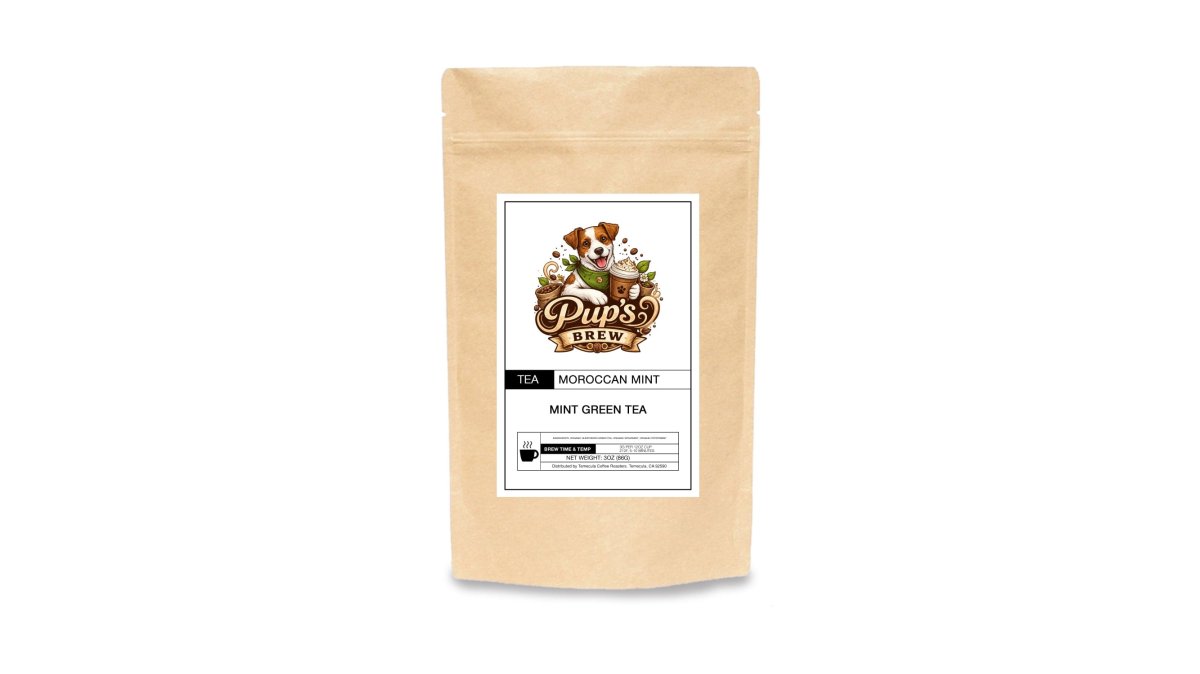
The Pups Brew Moroccan Mint and Jasmine blends are both designed for full leaf expansion, so don't skimp on the amount.
Loose Leaf Tea Steeping Time Guidelines
Steeping time is where most people go wrong. Too little time and your tea tastes weak and flat. Too much time and it turns bitter and astringent.
The right steeping time depends on three things: tea type, water temperature, and personal taste.
First steep: Most loose leaf teas taste best with their first steep. This is when you get the cleanest, brightest flavor. First steeps typically run 2-5 minutes depending on the tea type.
Multiple steeps: Here's what most guides miss, quality loose leaf tea can handle 2-3 additional steeps. Each steep extracts different flavor compounds. The second steep often tastes different from the first, sometimes better. Add 30-60 seconds to each subsequent steep.
Timing matters more than you think: The difference between a 3-minute and 4-minute steep is noticeable. Set a timer. Don't guess.
For specific teas from Pups Brew:
- Earl Grey: 5-10 minutes at 195°F
- Hibiscus Berry Tea: 5-10 minutes at 212°F
- Jasmine: 3-4 minutes at 180°F to preserve the delicate floral notes
Temperature and time work together. Hotter water extracts faster, so you need less time. Cooler water extracts slower, so you need more time. This is why green tea (cooler water) needs 2-3 minutes while black tea (hotter water) needs 4-5 minutes.

Step-by-Step Process to Brew Loose Tea
Here's exactly how to brew a perfect cup from start to finish.
Step 1: Heat Your Water to the Right Temperature

Fill your kettle with fresh, filtered water. Heat it to the temperature your tea needs. If you have an electric kettle with temperature control, set it precisely.
Black teas need 195-212°F. Green teas need 160-180°F. Herbal infusions need 200-212°F.
Don't use water that's been sitting around. Boil it fresh each time. Stale water produces flat tea.
Step 2: Measure Your Tea Leaves
While water heats, measure your tea. Use one teaspoon of loose leaf tea per 8-ounce cup.
For teas like our Jasmine or Moroccan Mint, use the full amount.
Step 3: Add Tea to Your Infuser or Brewing Vessel
Place your measured tea into your infuser basket or directly into your brewing vessel if you're using a strainer.
If using a basket infuser, make sure it sits loosely in your cup or pot. Tea leaves need room to expand and circulate.
Step 4: Pour Water and Steep
Once your water reaches the right temperature, pour it slowly over the tea. Fill your cup or pot completely.
Set a timer immediately. Don't rely on memory.
Let it steep undisturbed for the recommended time. Don't fidget with it or remove the infuser early.
Step 5: Strain and Serve
When the timer goes off, remove the infuser or pour through your strainer into your cup.
If you're brewing directly in a pot, pour carefully to avoid loose leaves ending up in your cup.
Serve immediately. Tea cools quickly, so drink it while it's hot (or let it cool intentionally if you prefer iced tea).
How to Brew Loose Tea Without an Infuser
No infuser? No problem. You can still brew excellent loose leaf tea.
The direct-brew method is simple: add loose tea directly to your cup or pot, pour hot water, and let it steep. When you're ready to drink, pour carefully into another cup, leaving the leaves behind at the bottom.
This works, but it's messy. Loose leaves float around and sometimes end up in your mouth.
The paper filter method is cleaner. Fold a coffee filter or paper towel into a small pouch. Add your measured tea leaves. Tie the top loosely with string or a twist-tie. Drop it into your cup and pour hot water. It works exactly like a tea bag, but you're using loose leaf tea.
The strainer-and-cup method is probably easiest. Use any fine-mesh strainer, a kitchen strainer, coffee filter holder, or even a small colander works. Place it over your cup and pour the brewed tea through it as you drink. This prevents leaves from floating into your cup.
The cloth method works too. Some people use small cloth pouches designed for loose leaf tea. You fill them, steep, and reuse them dozens of times. This is more sustainable than paper filters.
The key with any method: give the leaves room to expand and circulate. A cramped infuser or pouch creates weak tea. Loose leaves need space to release their flavor.
Pups Brew's blends are designed for full leaf expansion, so whichever method you choose, make sure your leaves can move around freely.
Common Brewing Mistakes to Avoid
Most brewing problems come from a few repeated mistakes.
Using water that's too hot for delicate teas. Green tea and white tea over-extract when water is too hot. This pulls out harsh, grassy compounds. The result tastes bitter and astringent.
Steeping too long. This is the most common mistake. People assume "longer = stronger," but that's wrong. Longer steeping just extracts more tannins and makes tea bitter.
Using old or stale water. Boil fresh water each time. Water that's been sitting around loses oxygen and produces flat, lifeless tea.
Packing the infuser too tightly. Leaves need room to unfurl. A packed infuser restricts water flow and prevents proper extraction. Fill your infuser loosely.
Forgetting to preheat your cup or pot. A cold brewing vessel cools your water immediately, lowering the actual steeping temperature. Rinse your cup with hot water first.
Using tap water with heavy chlorine or mineral content. Hard water and heavily chlorinated water interfere with tea flavor. If your tap water tastes off, use filtered water. The difference is noticeable.
Reusing old tea leaves. Loose leaf tea can be steeped multiple times, but there's a limit. After 3-4 steeps, the leaves are exhausted.
Not using a timer. Guessing steeping time is the fastest way to over-brew. Use your phone or a kitchen timer. Thirty seconds matters.
Brewing loose tea is straightforward once you understand the fundamentals: the right water temperature, the right amount of leaves, and the right steeping time.
At Pups Brew, we've curated a selection of premium loose leaf teas designed to shine when brewed properly.
Frequently Asked Questions
How much loose leaf tea per cup should I use?
The standard ratio is about 1 teaspoon of loose leaf tea per 8 ounces of water, though this varies by tea type and personal preference. Black teas and herbal blends like our Hibiscus Berry Tea (3g per 12oz) tend toward the fuller side, while delicate greens may use slightly less. Start with 1 teaspoon and adjust upward if your brew tastes weak or downward if it's too strong. Full-leaf teas expand significantly during steeping, so you may need less than fannings or broken leaves.
What's the best water temperature for brewing loose tea?
Water temperature depends on tea type. Black teas like our Earl Grey brew best at 195°F for 5-10 minutes. Green teas prefer cooler water around 160-180°F to prevent bitterness. Herbal infusions, including our Hibiscus Berry Tea, handle boiling water at 212°F. Using filtered water improves flavor by reducing minerals that can interfere with extraction. If you lack a thermometer, let boiling water cool for 3-5 minutes before pouring over delicate teas.
Can you brew loose tea without an infuser?
Yes. Pour loose leaves directly into your cup or brewing vessel, steep for the recommended time, then carefully pour the brewed tea into another cup, leaving leaves behind. Alternatively, use a fine mesh strainer held over your cup while pouring, or place leaves in a coffee filter secured with a rubber band. This method works well for full leaves that settle quickly. Avoid this approach with fannings or very small particles that slip through strainers easily.
How long should loose leaf tea steep?
Steeping time ranges from 3-10 minutes depending on tea type and water temperature. Black teas typically steep 5-10 minutes; green teas 3-5 minutes; herbal blends 5-10 minutes. Longer steeping increases extraction, which can boost flavor but may also increase bitterness if you overdo it. Start at the lower end of the range and taste as you go. Some premium teas like our Jasmine support multiple steepings, resteep the same leaves 2-3 times, adding 30 seconds to each subsequent steep.