

Is Specialty Coffee Worth the Cost? A Pup's Guide
Table of Contents
- What Makes Specialty Coffee Different
- Specialty Coffee vs Grocery Store Coffee: The Real Differences
- Why Is Specialty Coffee So Expensive
- Cost Per Cup: Breaking Down the Real Numbers
- How to Brew Specialty Coffee at Home
- Who Benefits Most, And Who May Not
- Conclusion: Is the Premium Worth Your Bark?
- Frequently Asked Questions
Last Updated: October 14, 2026
What Makes Specialty Coffee Different
Specialty coffee isn't just coffee with a premium price tag, it's a completely different product category from what you'll find on grocery store shelves. According to the Specialty Coffee Association's 2026 National Coffee Data Trends Report, specialty coffee remains the preferred category among coffee drinkers, with younger adults driving sustained growth in this segment.
At Pups Brew, we've curated single-origin and specialty blends that showcase these differences. The core distinction is quality standards, traceability, and flavor complexity: beans are graded on a 100-point scale, with 80+ qualifying as specialty grade, consistency mass-market coffee simply doesn't pursue.
Sourcing matters too. Specialty coffee comes from specific farms, microclimates, or cooperatives where the grower's identity is known, creating accountability from harvest to your cup.
Specialty Coffee vs Grocery Store Coffee: The Real Differences
The gap between specialty and commercial-grade coffee is wider than most people realize. Commercial coffee prioritizes volume, shelf stability, and consistent (but mediocre) flavor; specialty prioritizes flavor complexity, freshness, and origin character.
Taste and Flavor Profile
Specialty coffee delivers a sensory experience grocery-store coffee can't match. An Ethiopian single origin tastes nothing like one from Colombia or Brazil, fruity and floral in some, chocolatey and nutty in others, with wildly varying acidity and sweetness.

Grocery-store coffee is typically a blend of low-grade beans from multiple origins, often roasted dark to mask defects and stale flavors. Researchers have found that coffee quality attributes and ratings significantly affect specialty-coffee prices, with factors like aroma and flavor complexity commanding premiums that reflect their actual value to discerning drinkers.
Freshness and Roast Date
Freshness is where specialty coffee really separates itself. Roasters work in small batches and ship quickly, and a roast date on the bag matters because flavor peaks within 2-4 weeks of roasting.
Grocery-store coffee often sits for months, with a missing or ancient roast date. Stale coffee tastes flat and one-dimensional; freshly roasted specialty beans taste alive, with bright acidity and complex aromatics.
Sourcing and Traceability
You know exactly where specialty coffee comes from, the bag names the farm, region, altitude, sometimes the farmer. That transparency exists because producers take pride in their work.
Commercial coffee? Origin is vague or blended beyond traceability, "Brazilian blend," "Central American mix." That vagueness is intentional, letting producers source the cheapest beans regardless of quality.
Research shows that specialty coffee markets reward quality and traceability, supporting shaded and diversified farming systems, which means your premium actually funds better agricultural practices and farmer livelihoods.
Why Is Specialty Coffee So Expensive
The price premium isn't arbitrary, it reflects real differences in production, quality, and freshness. Knowing where the cost comes from helps you decide if it's worth it for your palate and budget.
Quality Grading and Bean Selection
Specialty coffee starts with higher-quality beans that cost more at origin. Farmers investing in shade-grown coffee, careful harvesting, and quality fermentation earn premiums from specialty buyers. These beans score 80+ on the SCA scale, versus 60-70 for commodity coffee.
Grading itself is expensive: professional cuppers score each batch for flavor, aroma, acidity, body, and aftertaste, labor-intensive quality control absent from commercial production.
Small-Batch Roasting and Direct Trade
Specialty roasters work in small batches, sometimes just 25-50 pounds, dialing in the roast profile for each origin's character. Commercial roasters process tons per day, sacrificing precision for volume.
Direct trade adds cost too. Importers work directly with cooperatives or individual farms, cutting middlemen and paying premiums so farmers get fair compensation. The relationship-building, travel, and quality oversight all add expense commercial suppliers don't incur.
Cost Per Cup: Breaking Down the Real Numbers
Bag price is the number everyone stares at, but it's the worst way to compare coffee. A $24 bag and a $10 bag can land within pennies per cup once you account for dose, waste, and how fast you drink it. Let's do the math your wallet actually experiences.
The Real Formula
Cost per cup = (bag price ÷ usable ounces) × dose in ounces, plus any waste from stale beans you toss.
A 12-ounce bag holds roughly 12 ounces of usable coffee, and a typical home dose is 0.6-0.7 ounces (17-20 grams) per mug, about 17-20 cups per bag.
Here's how that plays out across a realistic range:
| Coffee Type | Bag Size | Bag Price | Dose Per Cup | Cups Per Bag | Cost Per Cup |
|---|---|---|---|---|---|
| Grocery store ground | 24-30 oz | $8-14 | 0.6 oz | 40-50 | $0.20-0.35 |
| Grocery store whole bean | 12-18 oz | $9-15 | 0.65 oz | 18-28 | $0.40-0.75 |
| Specialty whole bean | 12 oz | $18-24 | 0.65 oz | 18 | $1.00-1.35 |
| Premium single origin | 12 oz | $24-35 | 0.65 oz | 18 | $1.35-1.95 |
At Pups Brew, our single-origin bags are priced at $23.99, and our sample packs run $24.99 for six 2-ounce portions.

The Waste Factor Nobody Talks About
Here's where grocery-store coffee quietly loses its advantage. A 30-ounce tub costs less per ounce, but at one cup a day it takes six to eight weeks to finish, and by week three those grounds have oxidized into cardboard.
Specialty coffee's smaller bags are a feature, not a bug. A 12-ounce bag at one cup a day lasts about two and a half weeks, right inside the flavor window. You waste less, so the sticker-price gap narrows more than it looks.
Equipment Is a One-Time Cost, Not a Per-Cup One
A decent burr grinder runs $40-150 and lasts years; a pour-over cone is $10-25; a French press $20-40. Spread a $100 grinder over three years of daily brewing and it adds roughly $0.09 per cup, a one-time decision, not a recurring premium, and the single biggest upgrade to how any bean tastes.
Where Diminishing Returns Kick In
The jump from $0.25 grocery coffee to $1.00 specialty is dramatic, most drinkers notice immediately. The jump from $1.00 to $1.95 is much smaller and depends on your grinder, water, and skill. Rare micro-lots can run $40-60 per bag, and for most home brewers the extra $20 buys bragging rights more than a noticeably better cup.
Single Origin Favorites Sample Pack →
How to Brew Specialty Coffee at Home
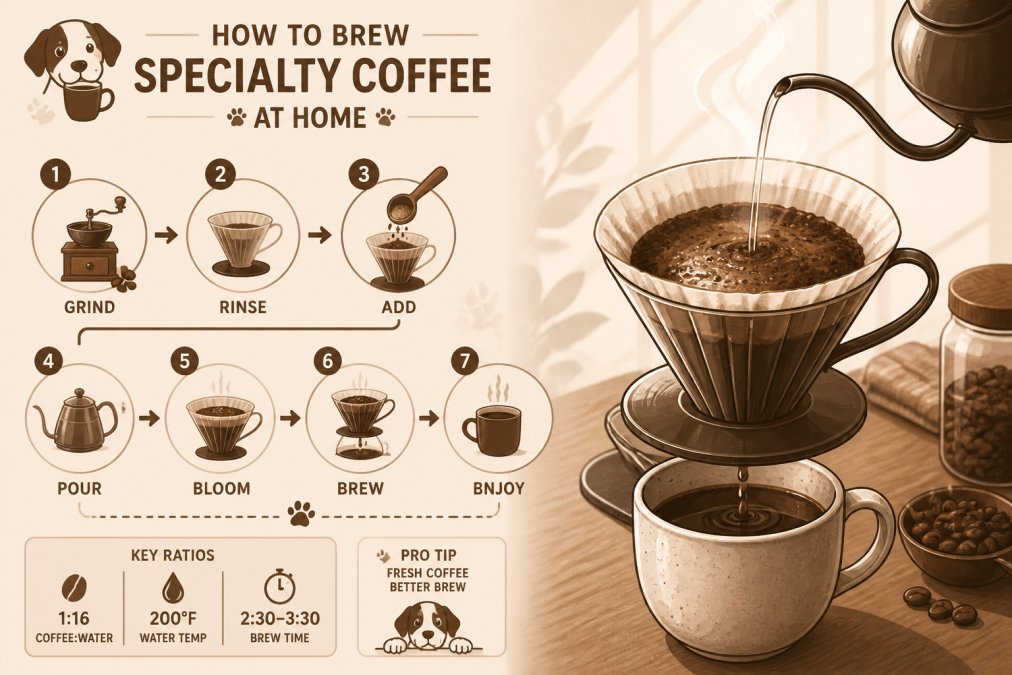
Specialty coffee demands slightly more care than dumping grounds into a drip machine, not complicated, just intentional. The investment in brewing method pays dividends in flavor.
Brewing Methods That Highlight Flavor
Pour-over, French press, and AeroPress all work beautifully with specialty coffee, each highlighting different characteristics: pour-over emphasizes clarity and acidity, French press brings out body and sweetness, AeroPress balances both.
The method matters less than consistency and intention, specialty coffee rewards attention. Start with whatever appeals to you: pour-over is forgiving with minimal equipment, while a French press is simple and produces a fuller cup.
Grind Size, Water Quality, and Extraction
Grind size controls extraction: too coarse and water rushes through without pulling flavor; too fine and you get bitterness. Medium-fine is a safe starting point for most methods.
Water quality matters more than most people think. Filtered water beats tap, which often carries chlorine or mineral imbalances that interfere with flavor, a basic pitcher filter works fine.
Extraction is the goal: dissolving the right compounds into your water at 195-205°F over 3-4 minutes. Rushing produces weak, underextracted coffee; taking too long creates bitter, overextracted coffee.
Who Benefits Most, And Who May Not
Specialty coffee is worth the cost for some drinkers and a waste for others, and the deciding factor isn't income or snobbery. It's how you drink your coffee, what equipment you own, and whether you actually taste the difference.
You'll Get the Most Value If You...
Drink it black. The single biggest predictor. Black coffee puts every flavor note front and center, the fruity acidity of an Ethiopian natural, the cocoa and caramel of a Colombian washed bean.
Already own a burr grinder. Pre-ground specialty coffee is a contradiction in terms, beans lose aromatics within minutes of grinding.
Brew one to three cups a day. The volume where a 12-ounce bag finishes before it goes stale and the per-cup premium stays modest.
Enjoy noticing differences. If you've compared two wines, teas, or hot sauces and cared, you'll care here.
You'll Get Less Value If You...
Drink it with milk and sugar. A latte or sweetened iced coffee buries origin character under dairy and syrup.
Rely on a drip machine with a blade grinder. Inconsistent particle size and uneven extraction flatten the complexity you paid for.
Drink fewer than four cups a week. A 12-ounce bag will stale before you finish it. Buy smaller bags, split with a friend, or freeze half airtight.
Are happy with your current cup. If you genuinely enjoy what you're drinking, there's no problem to solve. Specialty coffee is an upgrade, not a correction.
The Middle Ground: Where Most People Land
Most drinkers fall in between. A practical compromise: keep grocery-store coffee for rushed weekday mugs and brew a specialty single origin on weekends when you have five extra minutes, the sensory experience without the full budget commitment.
Our sample packs are built exactly for this, small portions, low commitment, enough variety to find out whether your palate actually cares. If it does, you'll know within a week.

Conclusion: Is the Premium Worth Your Bark?
Is specialty coffee worth the cost? The answer depends entirely on what you value. If you're already a daily coffee drinker, the premium is modest for a dramatically better sensory experience.
But if convenience matters more than flavor, or your budget is tight, grocery-store coffee is perfectly fine. There's no moral superiority in specialty coffee, just different priorities.
At Pups Brew, we believe the best coffee is the one you'll actually enjoy drinking. That's why we offer sample packs and single-origin options at accessible prices, with free shipping on all orders.
Frequently Asked Questions
Does specialty coffee really taste better than grocery store coffee?
Yes, but the difference depends on your palate and brewing method. Specialty coffee offers distinct tasting notes, like the berry and chocolate notes in our Colombia single origin or the fruity caramel of our Ethiopia Natural, because beans are sourced from specific farms and roasted fresh. Grocery-store coffee is often a blend of lower-grade beans roasted weeks or months ago. However, if you brew specialty coffee incorrectly or use poor water quality, you'll lose those flavors. The taste improvement is real, but proper brewing matters as much as bean quality.
How long does specialty coffee stay fresh after opening?
Specialty coffee is freshest within 2-4 weeks of the roast date. After opening a bag, store it in an airtight container away from light, heat, and moisture. Most specialty roasters print the roast date on the bag so you know exactly how fresh it is when it arrives. Grocery-store coffee often lacks a roast date, meaning you don't know how old it is. For the best experience, buy smaller quantities more frequently, or try a sample pack like our Single Origin Favorites to explore different origins without committing to large bags.
Can I make specialty coffee at home without buying expensive equipment?
Absolutely. You don't need an espresso machine or fancy grinder to enjoy specialty coffee. A simple pour-over cone, French press, or even a basic drip machine works well if you grind beans just before brewing and use filtered water. The most important factors are freshness, grind size, and water temperature, not equipment cost. Many coffee lovers start with a $15 pour-over cone and a hand grinder, then upgrade over time. Specialty coffee is about the beans themselves, not the gear.
What's the actual cost per cup of specialty coffee at home?
A $24 bag of specialty coffee typically yields 10-12 cups. Grocery-store coffee may seem cheaper upfront, but you'll often use more because lower-quality beans require higher brew ratios to taste good. When you account for brewing method and water waste, the actual savings shrink. Specialty coffee becomes the better value when you drink it daily and appreciate the flavor difference.